
Need help? Call us:
+91 95600 78750
+91 95600 78750
📞
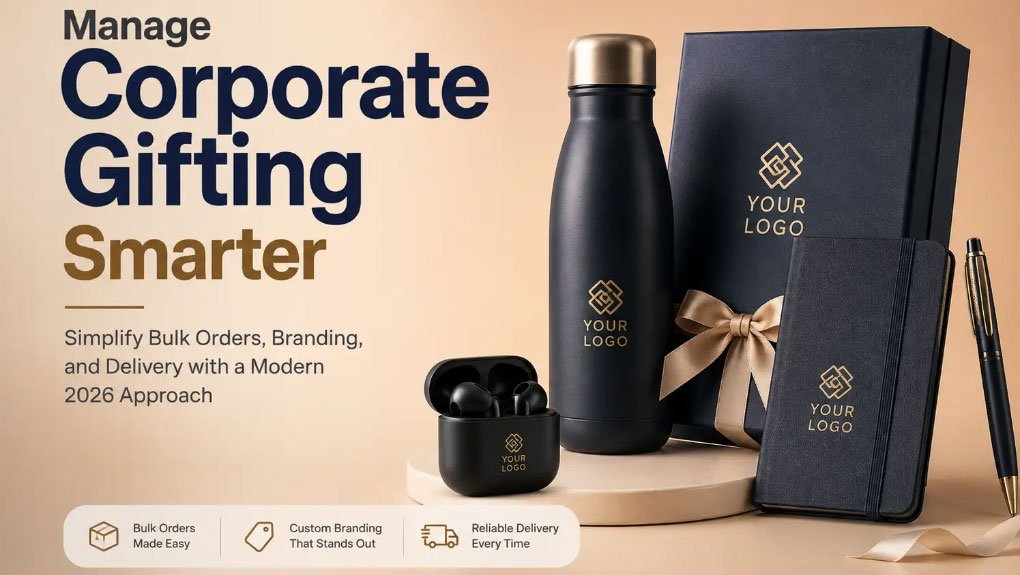
Modern teams are cutting waste, delays, and manual work with corporate gifting automation. If your gifting still runs on scattered orders and guesswork, the real issue is usually spend, inventory, and approvals.
The tricky part is that gifting in 2026 has to satisfy more than one department at once. HR wants it to feel thoughtful, finance wants control, marketing wants consistency, and sales wants speed. So the old “just send something nice” mindset doesn’t really hold up anymore.
Quick Highlights
The first question is whether anyone actually knows the full number, not just the product invoice total. That’s where a lot of programs fool themselves. The sticker price feels manageable, but the real cost shows up later in small, annoying pieces.
Hidden costs stack up fast: storage costs, multiple supplier invoices, urgent shipping charges, packaging expenses, inventory losses, and replacement orders. None of these sounds dramatic on its own. But together, they can turn a “reasonable” gifting program into a surprisingly expensive one.
Tracking spend by department, campaign, event, employee recognition, client gifting, and marketing promotions makes the budget picture much harder to fake. Once you split the numbers that way, you usually see where the waste is hiding.
A campaign can look cheap until storage, shipping, and replacement orders show up later. That is why fewer suppliers and centralized purchasing matter more than the sticker price. A lower unit cost is nice, sure, but it doesn’t help much if the back end is messy.
The useful split is not abstract. It is department, campaign, event, employee recognition, client gifting, and marketing promotions — the categories that show where the money actually went. That is also where department-wise budget visibility starts to matter instead of just total spend.
Once reporting gets more specific, budget conversations become less emotional too. Instead of arguing over whether gifting is “too expensive,” teams can see exactly which activity is driving the bill.
Bulk ordering still creates the most obvious waste problem in corporate gifting. It feels safe at first because you assume more stock means fewer emergencies. But in practice, it often means more leftovers, more storage, and more items that age badly before anyone uses them.
Common leftovers are wrong sizes, outdated branding, unused stock, warehouse storage costs, and damaged products. That’s a pretty ordinary list, but it causes real pain. A hoodie with the wrong logo version isn’t just an item anymore; it’s dead money sitting in a box.
That is why many teams are moving toward print on demand merchandise, small batch production, on demand fulfillment, and smarter inventory planning. The point isn’t to chase trends. It’s to buy less waste and more usefulness.
They are trying to avoid sitting on items that no longer match the brand or the moment. The inventory may exist, but it has already stopped being useful. And honestly, that’s the expensive part — not the purchase itself, but the fact that it never really did the job.
Print on demand merchandise and on demand fulfillment reduce waste, while inventory management software helps keep visibility from slipping. The point is relevance, not just storage. Modern teams want to know what exists, where it is, and whether it still deserves shelf space.
That shift matters because gifting is no longer about buying in advance and hoping for the best. It’s about having the right item ready at the right time without filling a warehouse with guesses.
As businesses grow, gifting breaks down when every team starts ordering independently. That’s usually when the program stops feeling coordinated and starts feeling expensive in a way nobody can quite explain.
The controls that still hold it together are department budgets, approval workflows, spending limits, vendor management, regional policies, and employee permissions. These aren’t glamorous tools, but they’re the difference between a controlled program and a free-for-all.
Without them, spending becomes inconsistent fast — even before anyone notices the pattern. And once inconsistency settles in, it’s hard to pull the system back without a lot of cleanup.
Department budgets and approval workflows do most of the heavy lifting here. Spending limits, vendor management, regional policies, and employee permissions are the guardrails that keep the program aligned with company rules.
In real life, this is what prevents one team from ordering premium items while another team is stuck with leftovers. It keeps the standard intact, which is a lot more useful than it sounds when multiple regions and teams are involved.
Timing matters more than people admit, especially when gifting has to arrive around a launch or a live event. A great item that shows up late is basically a missed opportunity wearing a nice box.
Late deliveries can affect product launches, trade shows, client onboarding, employee onboarding, festival campaigns, and customer appreciation programs. These are all moments where timing changes the experience. If the gift lands after the moment has passed, the value drops quickly.
When products are already available through a trusted inventory partner, fulfillment becomes significantly faster — which is where faster fulfillment for events starts to matter. It’s not just convenience. It’s the difference between smooth execution and awkward scrambling.
Lead time shrinks, urgent shipping becomes less common, and teams stop treating delivery as the final surprise. That makes the whole program feel more controlled. People notice that. Even if they don’t say it out loud, they notice when the system simply works.
And when gifting works quietly in the background, nobody has to rescue it at the last minute. That alone saves a lot of stress.
Manual gifting still burns time in the same places: spreadsheets, email approvals, manual address collection, individual purchase requests, and separate supplier communication. It’s death by a thousand tiny tasks. None of them feels huge, but together they eat hours.
Automation takes those repetitive steps off HR, marketing, and sales teams so they can focus on the actual program instead of chasing logistics. That’s a pretty big deal when the same request comes up again and again.
It is especially useful for employee onboarding, work anniversaries, birthdays, customer milestones, sales achievements, event registrations, and festival campaigns. These are recurring moments, so automating them makes the whole system cleaner over time.
Look, the goal here isn’t to automate everything just because you can. It’s to remove the repetitive stuff that slows people down and makes simple gifting feel oddly difficult.
Businesses are looking for one setup that reduces operational complexity instead of creating another layer of coordination. That’s the heart of it. Nobody wants a gifting system that needs its own management system.
The list is practical: faster product sourcing, better inventory visibility, cost control, easy customization, reliable nationwide delivery, branded merchandise, employee welcome kits, promotional giveaways, and client appreciation gifts. These are the things that make a program useful day to day, not just nice in theory.
That is also why a single trusted supplier starts to matter more than juggling multiple vendors. Fewer handoffs usually mean fewer mistakes, and fewer mistakes usually mean less cost hiding in the background.
| Traditional gifting | Modern corporate gifting | What it changes |
|---|---|---|
| Multiple suppliers | Single trusted supplier | Less coordination |
| Manual approvals | Automated workflows | Fewer delays |
| Large inventory | Smart inventory management | Less waste |
| Limited reporting | Real-time spending insights | Clearer control |
| Slow fulfillment | Faster delivery | Better timing |
| Generic products | Curated branded merchandise | Stronger relevance |
| Difficult budget tracking | Department-wise budget visibility | Cleaner accountability |
That table really says it all. Modern programs aren’t just prettier. They’re easier to run, easier to track, and much harder to waste money on without noticing.
These are the smaller doubts people usually have after they have already understood the main decisions around cost, inventory, approvals, and speed.
Q: Why is corporate gifting automation becoming important in 2026?
Because teams want to cut waste, reduce delays, and remove manual work while still supporting HR, marketing, sales, and customer programs.
Q: What is the biggest hidden cost in corporate gifting?
It is usually the full stack of storage costs, urgent shipping charges, packaging expenses, inventory losses, and replacement orders — not just the product price.
Q: What kind of gifts work well for modern programs?
Branded tech gifts, employee welcome kits, promotional giveaways, and client appreciation gifts tend to fit modern programs because they are easier to standardize and ship.
Q: How does department-wise budget visibility help?
It shows where spending is actually happening across departments, campaigns, and events, which makes control and reporting much easier.
Corporate gifting in 2026 works best when it is treated as a system: controlled spend, cleaner inventory, faster fulfillment, and less manual handling.
If your program can do that, it stops being a cost center and starts acting like part of the business. And that’s really the whole point, isn’t it? The best gifting programs don’t just look good. They quietly save money, protect time, and make every team a little easier to support.
