
Need help? Call us:
+91 95600 78750
+91 95600 78750
📞
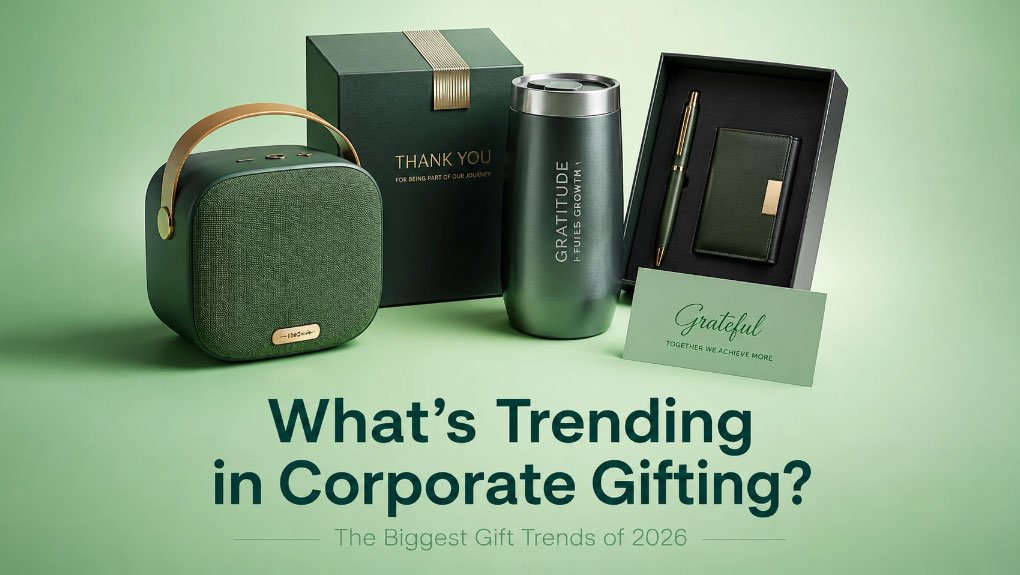
Corporate premium gifting is shifting fast in 2026, and the biggest winners are the ones that feel personal, practical, and worth keeping. That’s really the heart of it. People don’t want another forgettable branded thing tucked into a drawer. They want something that feels thoughtful enough to notice, useful enough to keep, and natural enough to use in real life.
So, if you’ve been wondering why some programs seem to land while others disappear into the noise, you’re not alone. The old approach was simple: pick a product, add a logo, ship it out. But now the best programs do more than deliver an item. They drive recognition, loyalty, and ROI in a way that feels a little more human and a lot less random.
Quick Highlights
Corporate premium gifting is shifting fast in 2026, and the real question is no longer whether to gift, but what people will actually notice, keep, and use. That shift sounds small, but it changes everything about how brands choose products, plan campaigns, and measure success. A gift is no longer just a nice gesture. It’s a signal. It tells employees, clients, and partners whether the brand actually understands them.
The piece opens with a simple idea: the best programs now drive recognition, loyalty, and ROI instead of just shipping out branded stuff. And honestly, that’s a healthier way to think about it. If the gift doesn’t create a moment, solve a problem, or support a relationship, it’s probably not doing enough. In 2026, people expect more than a logo on a surface. They expect a little relevance.
The seven trends all point to the same shift: people want gifts that fit real life, not gifts that only work on a spreadsheet. That’s the part a lot of teams are finally catching onto. The item may look great in a proposal, but if it doesn’t make sense on a desk, in a carry-on, or at home, it won’t last long in the real world.
Corporate Gift.com’s 2026 Trend Report names Micro Moments, Accessible Premium, Everyday Comfort, Personal Expression, Smart Functionality, Wellness-Minded Giving, and Streamlined Gifting. Each one is a response to a different kind of pressure: attention spans are shorter, budgets are under more scrutiny, and people are more selective about what they keep. In other words, usefulness now matters as much as appearance, and sometimes more.
That’s why the best programs feel a little more like thoughtful curation and a little less like bulk ordering. Not fancy for the sake of fancy. Not cheap for the sake of scale. Just smart enough to land well.
Those seven ideas aren’t just a trend list. They’re basically a map of where corporate gifting is headed. Some are about frequency. Some are about feel. Some are about operations. But they all answer the same question: how do you make a gift feel worth receiving?
The strongest trends are not interchangeable; each one fits a different moment in the relationship. That matters more than most people think. A welcome gift for a new employee shouldn’t feel like a conference giveaway. A client thank-you shouldn’t feel like a swag-bin leftover. And a trade show item needs to survive a very different environment than a milestone gift. Same category, different job.
That matters because the same gift strategy will not serve an HR onboarding program, a sales follow-up, and a conference giveaway equally well. If you’ve ever seen a great product used in the wrong place, you already know how awkward that can feel. So the real trick is matching the trend to the moment.
Micro moment corporate gifts work best when the goal is frequency: mini backpacks with carabiner clips, wrapped cookies, kraft notebooks, compact drinkware, clip-on accessories, and collectible desk pieces all keep a brand visible without feeling loud. This is the kind of gifting that builds familiarity over time. It doesn’t try to dominate the room. It just shows up often enough to be remembered.
Accessible premium gifting leans on a quarter-zip, a structured tote, or a modern water bottle that looks boutique-level instead of supply-room generic; the point is quality, not logo size. That balance matters. If the item feels expensive, even when it isn’t wildly expensive, people tend to treat it with more care. They wear it. They carry it. They keep it around longer.
Comfort forward branded apparel replaces the stiff embroidered polo with soft performance fabrics, relaxed silhouettes, and layering pieces that actually move from meetings to flights to weekends. And that’s really the point. If branded clothing feels like a uniform people tolerate, it won’t get much love. If it feels like something they’d choose anyway, it becomes part of their wardrobe instead of a one-time obligation.
| Trend | Best fit | Example from the report |
|---|---|---|
| Micro Moments | Event giveaways, desk drops, tiered recognition | Mini backpacks, wrapped cookies, kraft notebooks |
| Accessible Premium | Client appreciation, sales follow-ups, scalable programs | Quarter-zips, structured totes, modern water bottles |
| Everyday Comfort | Employee appreciation, sales kickoffs, internal events | Soft performance fabrics and relaxed silhouettes |
What stands out here is how practical the choices are. None of these trends rely on gimmicks. They’re built around actual use cases. That’s a good sign, because the more real the use case, the more likely the gift is to stick.
The trends with the most energy are the ones that let recipients feel something, not just receive something. That’s a subtle but important distinction. A generic gift says, “We sent this.” A personalized or useful one says, “We thought about this.” The second version always lands better.
That shows up in hands-on personalization and in products that solve everyday problems without becoming clutter. And honestly, that’s why these ideas are rising so quickly. People are tired of stuff that looks good for one minute and then turns into clutter for the next year.
Personal expression gifting moves beyond monograms into live moments like a charm bar for bags and accessories, a patch station for apparel, a color selection moment for drinkware, or eGifting and customizable product options. This makes the recipient part of the experience instead of just the end point. That small shift can create a much stronger memory, especially at events where people are surrounded by lots of forgettable giveaways.
The report cites 81% of customers in Forbes’ State of Customer Service and CX Survey preferring companies that offer personalized experiences, which makes this trend easy to defend for both events and HR. You can feel the logic behind that number. People naturally gravitate toward things that feel chosen rather than assigned.
Smart functional corporate gifts include a compact 3-in-1 charger, a bag built for both the gym and the office, and drinkware with interchangeable lids for hot or cold beverages — useful enough to earn repeat use, not just a drawer slot. That repeat use is what turns a giveaway into a brand impression engine. One use is nice. Fifty uses is better.
And that’s where utility starts to become a quiet marketing strategy. Not flashy. Not pushy. Just consistently present.
| Research source | What it found | Why it matters for gifting |
|---|---|---|
| Forbes State of Customer Service and CX Survey | 81% prefer personalized experiences | Choice and customization increase engagement |
| 2026 ASI Global Advertising Impressions Study | A typical promotional product generates 3,300 brand views over its lifetime | Useful items keep getting seen |
That second stat is especially interesting because it reminds you that a practical gift can keep working long after the moment it was given. It’s not just about the exchange. It’s about the impressions that keep happening afterward, quietly and repeatedly.
The last two trends are less flashy, but they may do the most work over time. One helps people feel cared for. The other helps the gifting program actually survive the year. Those are both pretty important, even if they don’t always show up in the most exciting way on a slide deck.
One is about care that feels genuine; the other is about making the whole system manageable enough to repeat. And repeatability is the hidden challenge in most gifting programs. A great one-time idea is easy. A consistent program that doesn’t exhaust the team is the real win.
Wellness-minded gifting favors quality hydration products, soft stadium blankets, desk plants, and comfortable home accessories over obvious logo pieces, especially for onboarding, Employee Appreciation Day, and retention programs. These gifts work because they show a little empathy. They say, in a practical way, “We notice what helps.” That’s a powerful message when people are juggling busy schedules and a lot of digital noise.
Gallup’s employee wellbeing research says employees who strongly agree their organization cares about their wellbeing are 69% less likely to be actively searching for a new job. That doesn’t mean a blanket or water bottle solves everything, of course. But it does mean the feeling behind the gift matters more than teams sometimes realize.
Streamlined gifting is the operational layer underneath all of this: a corporate gifting platform like CorporateGift.com can sync with HRIS or CRM systems, trigger gifts for milestone dates, work anniversaries, birthdays, and client events, and manage budgets, approvals, recipient choice, and tracking in one place. If you’ve ever tried to run gifting manually, you already know why this matters. The real mess usually isn’t choosing the gift. It’s everything after that.
That list may look simple, but each of those tasks tends to multiply fast. And once they pile up, even a good program starts to feel clunky. Automation doesn’t make gifting less personal. It just removes the friction that stops good ideas from happening consistently.
These questions come from the second layer of search intent: people who understand the trends but still need to decide what to buy, where to use it, and how to run it at scale. So let’s get into the practical stuff.
Q: What is the biggest corporate gifting trend in 2026?
Accessible premium gifting is the clearest headline trend, but Micro Moments and Smart Functionality are close behind because they solve practical problems without feeling cheap.
Q: What corporate gifts work best for employee recognition programs?
Micro moment corporate gifts, wellness minded gifting, and comfort-forward branded apparel all fit recognition well because they can be repeated, used often, and tied to specific moments.
Q: Should corporate gifts be branded or unbranded in 2026?
The trend points toward subtle branding. Gifts that feel premium or personal tend to get used more often than anything that looks overly promotional.
Q: How do I build a scalable corporate gifting program?
Use a corporate gifting platform and an automated gifting workflow so milestone dates, budgets, approvals, and recipient choice are handled without manual chasing.
In 2026, the smartest corporate gifting strategy is the one that makes people feel seen while still being easy to repeat. That’s the sweet spot. Not overdesigned, not overly branded, not dependent on someone remembering every detail by hand. Just thoughtful enough to matter and simple enough to keep going.
If the goal is loyalty, recognition, and ROI, start with gifts people will actually use — then build the automated system that lets you do it again without burning out the team. That’s the real takeaway here, and it’s probably the one most teams need to hear. The best gifting programs don’t just look good once. They keep working quietly in the background, one useful impression at a time.
