
Need help? Call us:
+91 95600 78750
+91 95600 78750
📞
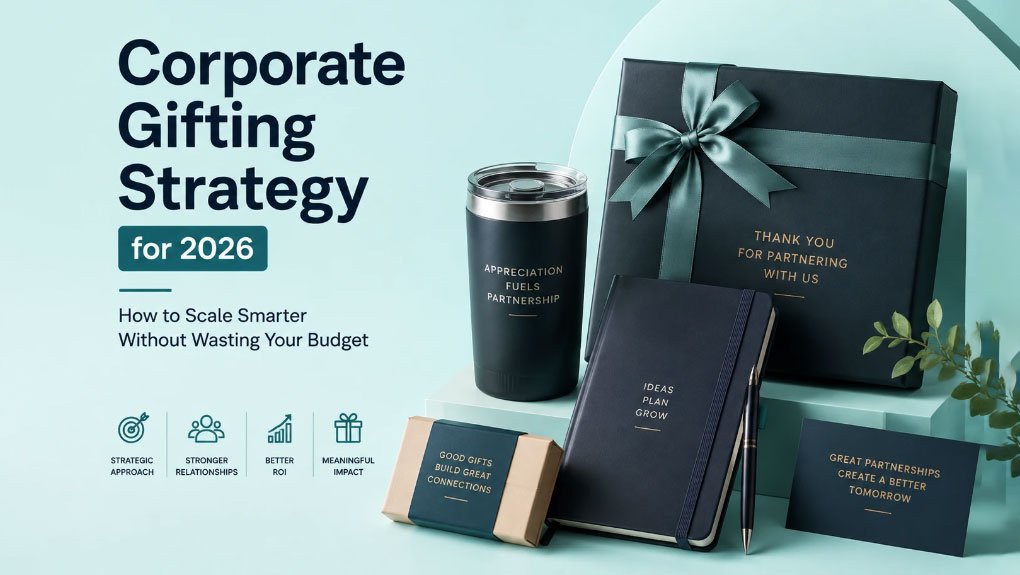
If you’ve ever sent out a batch of gifts and wondered whether anyone actually used them, you’re not alone. Corporate gifting can feel oddly simple at first, and then suddenly it turns into a mix of last-minute decisions, mismatched budgets, shipping issues, and gifts that look good for five seconds and vanish into a drawer.
That’s why building a smarter corporate gifting strategy for 2026 matters so much. The goal isn’t just to send things out. It’s to make sure the gifts are useful, memorable, and easy to manage whether you’re sending 20 packages or 2,000. And honestly, that difference changes everything.
Quick Highlights
The best way to build a smarter gifting plan is to stop thinking of it as a yearly expense and start treating it like a repeatable system. A strong corporate gifting strategy for 2026 helps you avoid wasted money, awkward gift choices, and the kind of process that becomes messy the moment your recipient list grows.
Here’s the thing: the real question is not whether to send gifts. Most businesses already know gifting can help. The real question is how to make those gifts useful, memorable, and manageable enough to support brand awareness instead of becoming just another line item you sigh about once a year.
Before you even look at products, you need to be clear about what the gift is supposed to do for the business. That sounds basic, but it’s where a lot of companies get it wrong. Brand awareness, retention, employee appreciation, and client relationships all point in different directions, so the gift should match the job.
A branded notebook might sit on a desk for months and quietly keep your name visible. A tech accessory can travel with someone to meetings and business trips. A premium coffee or wellness hamper can create a more emotional connection. That contrast matters more than trendiness, because a trendy gift that doesn’t fit the goal is still a weak gift.
Once the objective is clear, decisions get simpler. You can start asking better questions, like whether the gift creates repeated visibility or whether it just feels nice for one afternoon. That’s a much better filter than simply asking what looks premium on a catalog page.
Corporate gifting works much better when you break your audience into real groups instead of one generic pile of recipients. A long-term client, a new prospect, an employee, and a vendor don’t need the same thing, and pretending they do usually leads to forgettable results.
That split makes it easier to assign budgets and choose more relevant personalized client gifts without turning the whole campaign into one expensive mistake. It also helps with tone. A welcome gift should feel different from a milestone gift, and both should feel different from a festive gift for a long-term client.
This is also where the weak generic gift tends to fail. The same item for everyone usually ends up feeling forgettable to someone and excessive to someone else. When you group people thoughtfully, the whole experience feels more intentional, which is what good gifting is really about.
The best gifts are the ones people actually use. Decorative products can look impressive at the moment of unboxing, sure, but after that they often disappear into a shelf or a storage box. Useful items keep showing up, and that’s what gives the gift real staying power.
Useful options include premium notebooks and planners, desk accessories, travel organizers, laptop or tech accessories, bottles and drinkware, personalized stationery, wellness products, gourmet hampers, and eco-friendly everyday products. These aren’t flashy just for the sake of it, but that’s kind of the point. A gift should do something, not just exist.
A useful ₹800 gift can create more long-term visibility than a flashy ₹2,000 product that gets forgotten. That price contrast is really the whole argument in one line. If you’ve ever received something beautiful but impractical, you already know how fast the excitement fades.
| Gift type | Why it stays visible | Best fit |
|---|---|---|
| Branded notebook gifts | Stays on a desk for months | Brand awareness and daily use |
| Tech accessories | Travels to work, meetings, and business trips | Clients and prospects |
| Premium coffee or wellness hamper | Creates a stronger emotional association | Premium relationships and festive gifting |
Subtle branding tends to work better than a huge logo slapped on everything. People like gifts that feel thoughtful, not promotional. The recipient should see the gift as useful first and branded second, and that little balance is what separates a nice gesture from something that feels forced.
That can mean a small logo, a company color, a personalized note, or careful packaging. The box, wrapping, message card, and presentation all matter because they carry the tone of the gesture. Sometimes the packaging is the first impression, and sometimes it’s the thing people remember most.
This is where subtle corporate branding pays off. The gift feels considered instead of loud, and the brand stays tied to the experience without shouting from every surface. That’s usually a better long-term play anyway.
That approach makes even a modest gift feel more premium, which matters a lot when the budget isn’t built for showiness. Small details can do a lot of heavy lifting here.
A gifting calendar helps businesses stop reacting at the last minute. Waiting for a festival to show up usually means rushed decisions, higher costs, and less thought in the final choice. That’s not a great combo if the whole point is to build better relationships.
The useful thing about a calendar is that it gives you a rhythm. The raw content points to a full spread of occasions: New Year, employee anniversaries, customer anniversaries, Diwali, Holi, Raksha Bandhan, Christmas, company milestones, product launches, client achievements, and business partnerships.
Not every occasion needs a gift, and that’s okay. But the calendar should show where gifting can genuinely strengthen the relationship. A product launch or partnership announcement can be just as useful as a festival if the timing and audience fit. Sometimes the moment itself is what makes the gift memorable.
This part is less exciting than choosing a gift, but it’s where a lot of gifting plans are saved. Corporate gifting gets expensive fast once product cost, branding, packaging, personalization, shipping, taxes, and backup orders start piling up. Suddenly a simple idea becomes a lot more expensive than expected.
The budget needs to be set first, then broken into pieces so the campaign doesn’t quietly drift beyond what the business can support. That way, you’re not making emotional purchase decisions and then trying to explain them later. It sounds obvious, but it helps more than you’d think.
Different audience tiers can carry different spending levels, which is how a higher-value client can receive a premium gift while a broader group gets something more affordable but still useful. That kind of structure keeps the whole program realistic.
A strategy that works for 20 people can fall apart when the list becomes 200 or 2,000. Scalability has to be part of the plan from day one, not something added later after the pain shows up. If the process is clunky, the campaign becomes clunky too. It’s that simple.
The raw content lays out a repeatable sequence: identify recipients, assign the gift category, confirm quantities, finalize branding, approve packaging, collect delivery details, place the order, track shipments, record delivery status, and measure the campaign. That kind of workflow might not sound glamorous, but it saves a lot of headaches.
A simple corporate gifting database also helps by keeping recipient names, company details, previous gifts, important dates, and delivery information in one place. When everything is scattered, repeated gifts and missed dates become way too easy.
That structure is less about process theatre and more about avoiding repeated gifts, last-minute chaos, and scattered records. It gives the team something steady to follow, even when the list gets long.
A great gift can still land badly if it arrives late, damaged, or at the wrong address. Delivery is part of the experience whether businesses plan for it or not, so it’s worth treating it like a core piece of the strategy instead of a technical detail someone else will handle.
Before placing a large order, confirm delivery timelines, packaging quality, shipping coverage, tracking availability, replacement policies, bulk-order support, and customization deadlines. These are the boring checks that keep the nice idea from turning into a support issue.
For businesses sending gifts across different cities, bulk gift shipping support becomes a real operational issue, not a nice-to-have line item. If the logistics are weak, the whole campaign can feel messy even if the gift itself is great.
| What to confirm | Why it matters | What can go wrong |
|---|---|---|
| Delivery timelines | Protects campaign timing | Late arrival |
| Packaging quality | Preserves the impression | Damaged presentation |
| Tracking availability | Lets teams follow shipments | Unknown delivery status |
| Replacement policies | Reduces risk on bulk orders | No backup if something fails |
The smarter version of gifting connects to the broader marketing strategy. A branded item can carry a QR code to a website, product catalogue, loyalty programme, or dedicated landing page. That gives the recipient a next step if they’re curious, without making the gift feel pushy.
The point isn’t to turn the gift into an advertisement. It’s to give interested recipients an easy way to explore more if they want to. That’s a softer, more natural kind of brand movement, and it usually works better than hard selling through a gift itself.
The raw content also points to social media content, plus photographs or testimonials from recipients when permission is available. That extends the life of the campaign beyond the handoff, which is smart because the gift moment doesn’t have to be the end of the story.
A gifting campaign shouldn’t be judged only by delivery counts. If the goal is brand awareness, the useful question is what happened after the gift landed. Did people engage? Did they respond? Did the relationship move forward?
The metrics that matter here include website visits after the campaign, QR code scans, new enquiries, repeat purchases, customer retention, referral activity, social media mentions, direct feedback, and engagement from key accounts. Those signals tell you which gifts actually moved people.
That’s the kind of feedback loop that makes a program better over time. Without it, you’re just guessing, and guessing gets expensive pretty fast when gifting scales up.
The strongest campaigns are not one-off festival bursts. They’re repeated moments that make the brand feel more human over time. That’s a big shift in mindset, but it’s the one that makes gifting useful instead of random.
A welcome gift for a new client, a useful product at an important milestone, and a personalized festive gift can create multiple positive interactions throughout the year. That’s a very different model from “send something and hope they remember us.” It’s more grounded, and honestly, more effective.
The best brand awareness gifts are the ones that fit the relationship, not just the holiday. That’s the part many businesses miss. The right moment plus the right object plus the right tone tends to work much better than a flashy package with no real connection.
These are the questions people usually ask when they’re trying to avoid waste, overspend, or a gifting process that becomes unmanageable.
Q: What makes a corporate gift useful for brand awareness?
A gift is useful when it gets used repeatedly, like a notebook, tech accessory, or drinkware. Repeated use creates repeated visibility, which is what makes the gift do marketing work instead of just filling space.
Q: How do you choose gifts for different client types?
Split recipients into clear groups like new clients, long-term clients, high-value customers, and prospects. Then match the budget and gift type to the relationship instead of sending the same item to everyone.
Q: What should be in a corporate gifting database?
Keep recipient names, company details, previous gifts, important dates, and delivery information together. That prevents repeat gifts and makes future campaigns easier to manage.
Q: How do you stop corporate gifting from getting too expensive?
Set the total budget first, then divide it into product, branding, packaging, personalization, shipping, taxes, and backups. That keeps the campaign controlled before the product choice starts dictating the spend.
The right corporate gifting strategy for 2026 is the one that stays useful, recognizable, and easy to repeat as the business grows.
Start with a clear objective, choose relevant gifts, plan around a real calendar, and build a process that can handle scale without losing the personal touch. If you do that, gifting stops feeling like a rushed obligation and starts working like a real relationship tool.
So, don’t just send something because the season says you should. Build a system that supports the business all year, and the results will feel a lot more intentional.
