
Need help? Call us:
+91 95600 78750
+91 95600 78750
📞
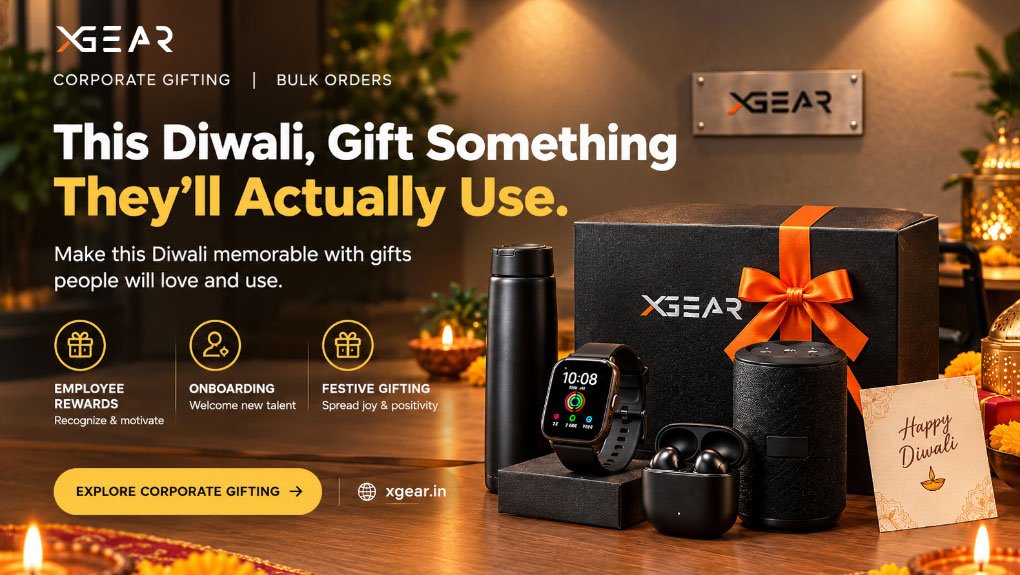
Diwali gifting can feel tricky for companies. You want something warm, thoughtful, and festive, but you also don’t want the gift to disappear into a kitchen cabinet or get forgotten after the holiday rush. That’s why corporate Diwali gifts are changing, slowly but clearly. The best ones aren’t just nice for the moment. They keep showing up in daily life long after the celebration ends.
And honestly, that’s the big shift. The real question is no longer whether a gift feels festive — it is whether employees, clients, and partners will still use it a month later. Corporate Diwali tech gifts are catching attention for exactly that reason. They feel modern, practical, and a little more thoughtful than something that looks good for a day and then fades away.
Quick Highlights
That doesn’t mean traditional gifts are suddenly bad. Not at all. It just means companies are thinking more carefully about value, usefulness, and the kind of impression they leave behind. And once you start looking at gifting through that lens, the whole conversation changes.
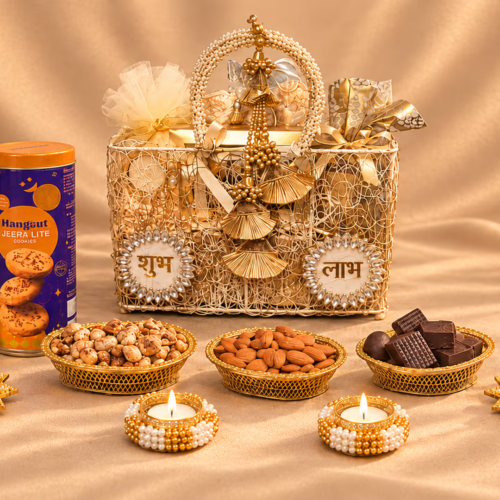
There’s a reason traditional gifts continue to work. They carry the emotional weight of Diwali: sweets, sharing, culture, and the familiar ritual of gifting across the business relationship. A box of mithai still feels like Diwali. A basket of festive treats still feels warm. That matters more than people sometimes admit.
The raw appeal is clear in the usual corporate set: Sweet Boxes, Dry Fruit Hampers, Diyas and Candles, Puja Hampers, and Festive Gift Baskets. They work for employees, clients, business partners, and senior professionals. They’re safe. They’re familiar. They rarely feel out of place.
But here’s the thing: most of them are consumed or put away after the festival. Once the sweets are finished and the candles are burned, there’s not much left. That’s where companies start asking a pretty simple but important question about long-term value. If the gift is gone in a week, what exactly is being remembered?
Sweet boxes are the fastest way to signal festival-season generosity, but they are also the quickest to disappear. They’re appreciated in the moment, sure, but the impact is short-lived. That doesn’t make them wrong. It just makes them limited.
Dry fruit hampers fit business partners and senior professionals well because they feel a little more premium and health-conscious. Meanwhile, diyas and candles, puja hampers, and festive gift baskets are more about atmosphere than lasting use. They help create the mood of Diwali, which is valuable, but they don’t usually stay part of someone’s everyday routine.
So, if your goal is purely seasonal warmth, traditional gifts still do the job. But if you want something that continues to deliver value after the festival, you may want to look further.
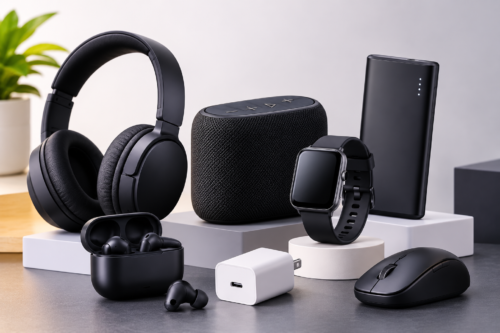
Tech gifts work because they’re not tied to one holiday moment. They slide into everyday routines at home, in the office, while travelling, and during downtime. That’s a pretty big advantage. Instead of being admired once and forgotten, they become part of normal life.
Modern tech gifts for Diwali feel especially strong because they balance usefulness with a sense of occasion. They still feel like a proper gift, but they also make sense in practical terms. Whether someone is commuting, taking calls, working remotely, or just relaxing at home, there’s usually a tech item they’ll reach for again and again.
This is the real shift in corporate gifting: usefulness is starting to matter as much as presentation. People still care how a gift looks, of course. But they care just as much about whether it solves a real problem or adds something useful to their day. That’s where tech gear quietly wins.
Wireless earbuds for gifting make sense for commuting, calls, and music. They’re one of those gifts people don’t always buy for themselves, but once they have them, they use them constantly. Bluetooth speakers for employees suit both work breaks and home use, which gives them a nice wide range of appeal. Smartwatch corporate gifting adds daily visibility, and that matters because the gift stays on the wrist, not in a drawer. And power banks for office gifts solve an obvious problem when people are on the move or stuck with low battery at the wrong time.
That mix is what makes these options feel so practical. They’re not flashy in a throwaway way. They’re useful in a way that keeps proving itself over time.
| Tech gift | Where it gets used | Why it lasts |
|---|---|---|
| Wireless earbuds | Home, commute, office calls | Used in everyday audio and communication |
| Bluetooth speakers | Work breaks, home, travel | Useful beyond the festival season |
| Smartwatches | Daily routine, fitness, notifications | Stays visible and relevant all year |
| Power banks | Office, travel, long workdays | Solves a recurring practical need |
If you’ve ever received a gift and kept using it without thinking twice, you already understand why these work. The value isn’t just in the item. It’s in the repeated use. That’s what gives a gift staying power.
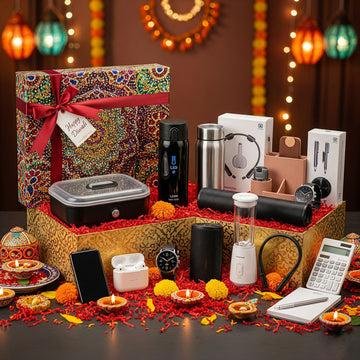
The decision is less about choosing tradition or novelty and more about what kind of impression the company wants to leave behind. That sounds simple, but it helps to be honest about it. A festive gift basket says, “We wanted to share the season with you.” A tech gift says, “We wanted to give you something you’ll actually use.” Both can be thoughtful. They just signal different priorities.
Festive gift baskets still fit warm, culture-first gifting. They’re easy to appreciate, and they fit naturally into Diwali celebrations. Tech gear, on the other hand, fits companies that want bulk Diwali gifting ideas with more utility and a longer afterlife. It’s the better fit when the goal is to make sure the gift doesn’t vanish once the festival ends.
That is why the strongest choice often depends on the audience. Employees may value daily-use products because they’ll feel the benefit right away. Clients, especially in more premium business relationships, may remember a gift that feels modern and considered. And partners may appreciate something that feels less generic than the usual seasonal box.
There’s also a subtle brand point here. The gift becomes part of how people experience your company. So if the gift feels practical, the company feels practical. If it feels thoughtful, the company feels thoughtful. Small thing, maybe. But it matters.

Corporate gifting has become more selective because businesses want gifts that feel thoughtful without becoming disposable. Nobody wants to send something that feels random. Nobody wants to spend money on something that gets politely accepted and immediately ignored. That’s where modern expectations have shifted.
And that’s where the move toward modern tech gifts for Diwali makes sense. The gift is still celebratory, but it also earns its place in normal life after the festival. That combination is hard to beat. It makes the gift feel relevant in two different moments: the festive one and the everyday one.
Look, not every company needs to move away from traditional hampers completely. Sometimes the most appropriate gift is still a sweet box or a curated festive basket. But if your goal is to give something with longer value, tech gear does a better job of staying visible. It keeps working. It keeps reminding people. And in corporate gifting, that kind of quiet usefulness goes a long way.
These questions usually come up when people compare festive hampers with tech gifts and want to know what really makes sense in a business setting.
Q: Are traditional Diwali gifts still good for corporate gifting?
Yes, especially when the goal is to keep the gift festive and culturally familiar. Traditional gifts still carry warmth, tradition, and a strong Diwali feel. The limitation is that most of them are used up quickly or set aside after Diwali, so their value is often short-lived.
Q: Which tech gifts work best for employees and clients?
Wireless earbuds for gifting, Bluetooth speakers for employees, Smartwatch corporate gifting, and power banks for office gifts are the strongest options here because they fit daily routines and do not feel tied to one occasion. They’re practical, easy to use, and useful across different kinds of work and personal life.
Q: Why are tech gifts better than hampers for bulk Diwali gifting?
Because they create longer-term value. A hamper is appreciated in the moment, while a useful device keeps showing up in the recipient’s day-to-day life. That repeated use is what makes the gift feel more memorable and, honestly, more worth the investment.
If the goal is to make a Diwali gift feel useful beyond the festival, corporate Diwali tech gifts are the stronger bet. They’re practical, modern, and more likely to stay part of someone’s daily routine. That doesn’t erase the charm of traditional gifting, but it does change the balance.
Traditional hampers still have a place, especially when warmth and familiarity matter most. But companies that want their gift to be remembered after Diwali should lean toward products people will keep using. In the end, the best gift isn’t just the one that looks good on the day. It’s the one that quietly earns its place afterward.
